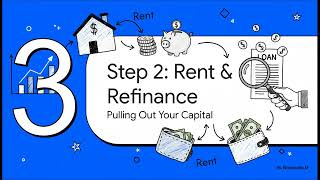
Scale From 5 to 150+ Units Without Hitting Personal Debt Limits
Achieve sustained portfolio growth beyond conventional DTI limits through commercial DSCR debt structures, forensic expense auditing, and tax-deferred equity compounding designed for serious property investors.
Break DTI Caps & Accelerate
Overcome conventional mortgage ceilings using commercial DSCR portfolio debt, unpermitted ADU appraisal guidelines, and creative seller financing.
Model DSCR Leverage →Force Appreciation & Cash Flow
Optimize trapped equity and cash flow with forensic operating expense audits, RUBS utility billing systems, and return on equity (ROE) rebalancing.
Read 150-Unit Case Study →1031 Chains & Commercial Scale
Defer capital gains taxes on each sale through cross-state 1031 exchanges, rolling pre-tax equity into larger commercial assets and syndications.
Launch 1031 Tax Simulator →Welcome to Entrepreneurs Report, directed by active commercial real estate strategist Curtis Waters, MBA. Long-term portfolio growth requires clear financial metrics: deploying non-recourse DSCR loans, evaluating returns with an institutional cap rate and DSCR calculator, and tracking cash-on-cash yield on every asset. When exiting properties, executing an IRC § 1031 exchange allows you to defer capital gains and reinvest 100% of your pre-tax equity into larger commercial assets.
Real Estate Portfolio Growth: Core Strategies & Frameworks
A comprehensive guide to scaling your property investments, optimizing cash flow, and building lasting wealth.
- 1. Fundamentals of Modern Real Estate Portfolio Growth
- 2. Strategic Financing and DSCR Loan Mechanics
- 3. Tax Strategies, Depreciation, and 1031 Exchanges
- 4. Multifamily Investing & Commercial Scale
- 5. Finding Off-Market Deals & Overcoming Analysis Paralysis
- 6. Portfolio Risk Management & Market Cycles
- 7. Building Professional Industry Relationships

1. Fundamentals of Modern Real Estate Portfolio Growth
Cash flow decides whether a rental portfolio grows or stagnates. Sustained growth requires managing multiple profit streams simultaneously: monthly rental income, debt paydown through tenant rent, property appreciation, and valuable tax deductions. However, expanding your portfolio beyond a few houses requires an organized strategy—as proven in our 150-Unit Scaling Case Study.
Many beginner investors struggle because they focus solely on purchase prices rather than cash flow mechanics. To build a resilient portfolio, you must evaluate every asset based on its net operating income. Using a standard cap rate calculation allows you to quickly compare properties across different neighborhoods and markets. Calculating your return on equity (ROE) and cash-on-cash return shows how hard your invested dollars work each year. By measuring these key performance indicators before making an offer, you protect your capital and ensure that every new property adds positive cash flow to your balance sheet.
2. Strategic Financing and DSCR Loan Mechanics
Financing is the engine of portfolio expansion. In traditional home buying, lenders focus heavily on your personal W-2 income, tax returns, and personal debt-to-income ratios. While this works for your first few residential properties, traditional banks quickly hit a wall once an investor owns four to ten homes. This is where debt service coverage ratio financing, commonly known as DSCR loans, becomes essential for real estate rentals.
To accelerate real estate portfolio growth, a DSCR loan evaluates the property itself rather than your personal employment income. Lenders analyze whether the gross monthly rental income covers the property's monthly mortgage payment, property taxes, insurance, and HOA dues. If the coverage ratio meets lender thresholds—typically 1.20 or higher—the loan can be approved quickly without requiring personal tax returns. DSCR underwriting parameters allow real estate investors to scale past five properties without personal debt-to-income limits. Creative financing methods such as seller financing (IRC § 453), Subject-To investing, and hard money to DSCR refinances provide flexible pathways to fund acquisition deals in competitive markets.
3. Tax Strategies, Depreciation, and 1031 Exchanges
Tax management is one of the most powerful advantages of real estate investing. Tax laws allow real estate owners to deduct annual property depreciation against their rental income, reducing their taxable income even when the property generates positive cash flow. However, when you sell an appreciated property, the IRS expects you to pay capital gains taxes as well as depreciation recapture taxes. These combined taxes can easily consume 25% to 35% of your total gains.
To avoid losing your hard-earned equity to taxes, experienced investors utilize a 1031 exchange. Named after Section 1031 of the Internal Revenue Code, this strategy allows an investor to defer 100% of capital gains taxes by rolling the proceeds from the sale of one property into a new investment property of equal or greater value. Executing a 1031 exchange across state lines or transitioning from single-family houses to larger commercial assets lets you compound your wealth exponentially over time. Combining tax-deferred exchanges with cost segregation recapture analysis and partial asset disposition ensures that your real estate rentals retain maximum capital for future investments. For foreign investors, structuring through a US LLC for non-US owners protects international capital under US law.
4. Multifamily Investing & Commercial Scale
While single-family real estate rentals are great for getting started, scaling to commercial multifamily properties offers superior operational efficiency. Managing 50 units under one roof is significantly cheaper per unit than managing 50 separate single-family houses spread across a city. Roof repairs, lawn care, insurance policies, and property management expenses become consolidated, reducing operational drag and improving overall net operating income.
Underwriting commercial multifamily properties for sustained real estate portfolio growth requires a sharp focus on value-add opportunities and rigorous NOI & Operating Expense Ratio (OER) forensic auditing. Investors look for properties with below-market rents, unbundled utility costs, or deferred maintenance. By implementing RUBS utility billing systems, strategic renovations, and professional management, you can force appreciation by raising the property's net income. Because commercial real estate values are calculated by dividing net operating income by the market cap rate, even a modest increase in monthly rent can add hundreds of thousands of dollars in property equity. Analyzing cash-on-cash returns across multifamily acquisitions ensures that your equity continues to generate strong distributions.
5. Finding Off-Market Deals & Overcoming Analysis Paralysis
Finding profitable properties in today's real estate investing environment requires proactive deal sourcing. Relying solely on public MLS listings often leads to bidding wars and narrow profit margins. Successful investors build direct-to-seller marketing channels to find off-market real estate rentals before they hit the open market.
Using high-quality skip tracing tools, investors locate property owners with vacant houses, high equity, or out-of-state addresses. Direct outreach via phone, mail, or digital marketing creates private acquisition opportunities where you can negotiate win-win seller terms. Many investors get stuck in analysis paralysis, spending months analyzing spreadsheets without taking action. Overcoming analysis paralysis comes from establishing strict underwriting rules. When you know your target cap rate, required cash-on-cash yield, and loan requirements ahead of time, evaluating deals becomes a simple decision process rather than an emotional struggle.
6. Portfolio Risk Management & Market Cycles
Long-term real estate portfolio growth requires an investment plan that accounts for economic market cycles. Interest rates, inflation, local employment trends, and housing supply constantly shift over time. Real estate investors who navigate multiple market cycles successfully are those who maintain conservative leverage and adequate liquidity reserves.
Stress-test debt service against rising interest rates and temporary vacancy increases by identifying the 5 hidden portfolio risks. Maintaining fixed-rate debt structures, such as long-term DSCR loans or blanket cross-collateralized commercial notes, protects your cash flow against interest rate spikes. Diversifying your holdings across different property types and job growth markets insulates your income stream. By combining prudent cash reserves with reliable real estate rentals, your portfolio remains stable and profitable during any economic climate.
7. Building Professional Industry Relationships
Real estate is fundamentally a business built on relationships. No investor scales a large portfolio entirely on their own. Surrounding yourself with experienced commercial brokers, specialized property managers, real estate attorneys, tax accountants, and private lenders accelerates your growth trajectory dramatically.
A trusted commercial broker gives you early access to pocket listings before they reach public databases. A skilled property manager keeps your vacancies low and tenant retention high, directly improving your annual cash-on-cash returns. Working closely with tax professionals allows you to structure a 1031 exchange seamlessly whenever you sell an asset. As detailed in Curtis Waters' business strategy book, "The Relationship Blueprint: Unleashing the Power of Business Connections," building authentic, mutually beneficial relationships with industry partners is one of the single greatest competitive advantages in real estate investing.

Join the Community
Subscribe to receive high-level asset-sourcing strategies, advanced workflow automations, and institutional portfolio frameworks delivered directly to your inbox.
Subscribe on SubstackThis briefing expands upon the core financial and capital connection principles established in "The Relationship Blueprint."
Explore Our Complete Resource Hub
Access step-by-step guides, calculators, and detailed operational frameworks.
Portfolio Acceleration
Practical frameworks to audit, scale, and force appreciation across 10 to 150+ rental assets.
- 150-Unit Scaling Case Study
- Residential to Commercial Framework
- How to Calculate ROE & Rebalance
- ROE vs. ROI Equity Yield Strategy
- Forced Appreciation Strategies (NC/SC)
- AI-Driven Property Management
- Portfolio Evaluation Guide (2026)
- Risk Mitigation in Real Estate Equity
- Overcoming Analysis Paralysis
- Embracing Discomfort to Scale
- Portfolio Evaluation Service →
Debt & Creative Finance
Unlock scalable debt structures, DSCR loans, seller notes, and private capital solutions.
- Pro Forma vs. Underwriting Reality
- DSCR Underwriting Mechanics
- Blanket DSCR Portfolio Loans (5-25 Units)
- Hard Money to DSCR Refinance Guide
- DSCR with Unpermitted ADUs & Space
- DSCR Stabilization & Lender Documents
- Seller Financing Tax Architecture (IRC § 453)
- 2026 NC & SC Portfolio Seller Financing
- Subject-To Real Estate & Due-on-Sale
- JV Agreement Structuring & Splits
- 5 Hidden Debt & Portfolio Risks
- Interactive DSCR Calculator Tool →
Tax & Compliance
Protect asset equity, navigate cross-border LLC rules, and legally defer capital gains taxes.
- CALCULATOR Cost Seg & 1031 Tax Simulator →
- 7-Point 1031 Due Diligence Checklist
- 1031 Exchange Strategies Blueprint
- Cost Segregation Recapture (1245 vs 1250)
- Why Cost Segregation Can Be a BAD Idea
- Partial Asset Disposition (IRC 168(i)(8))
- US LLC for Non-US Owners Guide
- SDIRA Compliance & Prohibited Rules
- Verifying Vendors & Tenant Screening
- The Relationship Blueprint (Ethical Strategy)
- Executive Advisory Bio →
Commercial & Multifamily
Scale into 20 to 100+ unit commercial assets with institutional expense auditing and utility recovery.
- Multifamily NOI & OER Forensic Audit
- Multifamily OER Benchmarks (20-80 Units)
- RUBS Utility Billing Implementation
- DSCR Loans for Multifamily Scaling
- Is Multifamily Passive Income?
- Real Estate Financials Mastery (Cap Rate & Audit)
- 150-Unit Commercial Underwriting Blueprint
- Multifamily RUBS Ratio Calculation Worksheet
- Multifamily NOI & OER Audit Checklist
- High-Quality Skip Tracing Deal Sourcing
- Multifamily Strategy Hub →
Institutional Investor Toolkits & Downloadable Checklists
Access our free spreadsheet calculators, IRS audit worksheets, and underwriting blueprints to analyze deals with institutional precision.
Interactive Investor Toolkit (5 Models) →
5 live browser models: DSCR, 1031 Exchange, ROE, Value-Add NOI & Seller Financing.
Cost Segregation Tax Audit Checklist →
Section 1245 vs 1250 depreciation recapture worksheet & breakeven holding matrix.
1031 Exchange 45/180-Day Checklist →
Replacement identification, QI timeline tracker, and mortgage boot audit sheet.
DSCR Loan Underwriting Checklist →
Debt service coverage formulas, Form 1007 rent schedule, and liquidity rules.
Multifamily RUBS Utility Worksheet →
Ratio utility billing formulas, lease clauses, and resident bill-back models.
Multifamily NOI & OER Audit Sheet →
Forensic spreadsheet formulas, expense audit ratios, and value-add benchmarks.
150-Unit Portfolio Growth Blueprint →
Step-by-step commercial acquisition checklist to scale from 5 to 100+ doors.
Subject-To Due-on-Sale Checklist →
Legal disclosures, insurance transfer protocols, and seller protection clauses.
SDIRA Real Estate Compliance Checklist →
Step-by-step IRS compliance, disqualified persons, and UBIT/UDFI safeguards.
Access the Master Real Estate Resource Directory
Explore vetted private lenders, nationwide title companies, property management automations, skip tracing vendors, and interactive valuation calculators.
Frequently Asked Questions (FAQ)
What is a DSCR loan for real estate rentals?
A DSCR loan evaluates a rental property based on its cash flow rather than personal employment income. Lenders verify that monthly rental income covers the property's mortgage payment, taxes, and insurance by a target ratio, usually 1.20 or higher. You can estimate your ratio using our interactive DSCR calculator.
How does a 1031 exchange work when selling rental property?
A 1031 exchange allows real estate investors to defer capital gains taxes when selling an investment property by rolling all sale proceeds into a replacement property of equal or greater value within strict 45-day identification and 180-day closing timelines.
What is Cap Rate in real estate investing?
Capitalization Rate (cap rate) measures a property's annual rate of return. It is calculated by dividing net operating income by the purchase price or current market value of the property.
How is cash-on-cash return calculated for rental properties?
Cash-on-cash return measures annual pre-tax cash flow divided by the total cash invested (down payment, closing costs, and initial rehab). It shows your actual annual cash yield earned on out-of-pocket funds, complementing your Return on Equity (ROE).
What are the potential challenges or risks of a cost segregation study?
While cost segregation accelerates depreciation to reduce early-year income taxes, potential challenges include future depreciation recapture taxes upon sale, engineering study costs for smaller assets, and passive loss restrictions if you do not qualify as a real estate professional under IRS rules. Review our full guide on when cost segregation can be a bad idea.
Can non-US citizens invest in US real estate and how should they structure ownership?
Yes. Foreign nationals and non-resident aliens can legally acquire US real estate, fund private promissory notes, or participate in syndications. Most foreign investors establish a dedicated US LLC for non-US owners to limit personal liability, facilitate US banking, and secure financing. Key compliance requirements include filing annual IRS Form 5472 (IRC §6038A), making an IRC §871(d) Net Income Election on rental cash flow to avoid a flat 30% gross withholding, navigating FIRPTA withholding (IRC §1445), and qualifying for Foreign National DSCR or hard money bridge loans without a domestic US credit score. Because cross-border tax elections and withholding exemptions are strictly audited, foreign investors must execute these structures in coordination with a qualified cross-border CPA or international tax attorney.